When I was assigned this project, I wanted to pick a topic that would appeal to my runner friends. The problem is, I am not a distance runner. So I turned to my best friend, Taylor Warren. During our senior year at Texas A&M, Taylor began training for her first half marathon. She instantly fell in love and has been running them ever since. So I asked her, “What is something you wish you knew about running before you started this new hobby?” She gave me a ton of answers but there was one that stuck out to me the most, “Do I really have to stretch and warm-up? I’d rather just start running.” The light bulb went off and I knew what to write about: Is a warm-up necessary?

What is a dynamic warm-up?
When you think of “warming up” before running, what comes to mind? Stretching? An easy jog? That is what most people think of. But there is a better way to prepare for your run than just simply stretching. Performing in a dynamic warmup can help prepare your muscles for your upcoming run¹. A dynamic warm-up helps activate the muscle you are about to use in a way that simulates the movement of running but at a lower intensity level. The benefits of this kind of warm-up include¹:
- Increased body and tissue temp
- Increased circulation
- Increased neural activation
- Improved tissue extensibility and joint ROM
- Improved body awareness
- Help prepare the body for greater load absorption and muscle force output
What does the research say?
There has been a lot of research done on the effects of static stretching, dynamic stretching, and not warming up at all. There are many conflicting pieces of evidence when it comes to preventing injury and improving your running speed and distance. But, each piece of evidence does agree that including a dynamic warm-up, strengthening muscles, wearing proper shoes, and controlling your mileage can all prevent injuries².
But let’s dive into what the research says about warming up and stretching. During the late phases of running, the hamstrings eccentrically control the deceleration of knee extension. If the hamstrings are not long enough, it may impact our stride distance, and load absorption and puts us at a greater risk of a hamstring injury. Performing in a dynamic warm-up can help increase joint ROM and elasticity of the hamstrings. The science behind this is quite simple. Dynamically stretching the hamstring will make the muscle-tendon unit more compliant³. In others, it will allow the muscle-tendon unit to withstand more force and stretch as it is used. This increased compliance will allow the muscle for greater force production and resist excessive elongation³. All of this together will decrease the chances of a muscle strain injury. What makes this different from static stretching is that we are performing these stretches with movement. This allows for blood to circulate to the muscles to increase temperature and provide the muscle with the nutrients it needs to reduce resistance and increase flexibility⁴⁵. Static stretching involves moving a joint as far as it can go and holding it there. Research shows that performing just static stretching may temporarily decrease muscle power and strength which can significantly reduce your performance⁶. This idea is called stretch-induced strength loss. But there is still a place for static stretching. If you are an athlete who needs the flexibility of joints, such as a gymnast, static stretching may be best for you. But for those athletes needing the power to perform their sport, static stretching should not be the only way you warm up and prepare for your event. Instead, use static stretching after your event as part of your cool-down to prevent post-workout stiffness.
What should I include in my warm-up?
To begin your dynamic warmup-start with a 3-5 minute slow jog to get your muscle warm and prepared. After your jog, include some drills, shown below, for about 6-10 minutes.
- High knees
- Butt kicks
- A-skips
- B-skips
- Carioca drill
Check out this video for a visual representation of some of these drills:
While performing these drills, be intentional. Lazily performing these drills will not prepare your muscles for the run, which could increase your chances of being injured. It is like what every coach has ever said: “Practice how you play.”
What else can I do to prevent injuries?
So you did your dynamic warm-up, ran 10 miles, and did a cool down. You are done, right? Wrong. To prevent running injuries, there are several other things you need to do to take care of your body.
1. Time to get strong
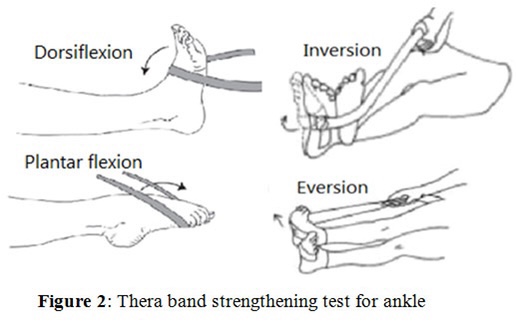
One of the most important things you can do is strengthen your muscles, such as the gastrocnemius/soleus complex, quads, hamstrings, and ankle muscles². One common injury in runners is Achilles tendinopathy. If you get pain at the back of the heel after you run, you know what I am talking about. Focusing on strengthening the gastrocnemius and soleus complex can prevent this injury by taking the stress off the Achilles tendon². Performing exercises like calf raise or controlled plantarflexion with a theraband can improve the strength of these muscles.
Another common injury in runners is patellofemoral pain, also known as runner’s knee. Athletes with this injury will experience pain at the front of the knee, around the kneecap. Thankfully, there are ways to prevent this pain from coming on. Focusing on strengthening your quads, hamstrings, hip abductors, and external rotators can help keep the knee balanced during running².
One of the most important muscle groups to focus on to prevent running injuries is your foot intrinsics and ankle muscles⁷. Focusing on these muscle groups can help prevent your longitudinal arch from collapsing, increase joint stability, and allow for better shock absorption when you land. One of the best ways to enhance this muscle group is by performing functional balance exercises. Not only will this strengthen, but it can improve your ability to adapt to different terrains you may encounter on your run.
2. Yes, spend money on good shoes
Every runner is unique in their running style. Therefore, everyone requires a shoe that is unique to them. Your shoe should be able to support you and enhance your biomechanics of running. In general, there are three types of shoes that you can pick from: cushion, stability, and motion control⁸.
Cushion shoes are best for those runners who excessively supinate⁸. In other words, these runners run more on the lateral side of your foot. This does not allow for appropriate shock absorption and causes injuries up the chain in the knees and hips. Cushion shoes allow for more pronation to enhance shock absorption as you land⁸.
Stability shoes are best for those that mildly to moderately overpronate⁸. These runners tend to run on the medial aspect of the foot. This population is more prone to developing shin splints, hip pain, and Achilles tendonitis. These shoes can prevent the arch from collapsing too fast and allow for more appropriate shock attenuation⁸.
Motion control shoes are for those who are severe overpronators⁸. They contain everything a stability shoe has plus a reinforced heel counter and denser midsole. This shoe can better control the arch from collapsing to allow for better propulsion and prevent injuries like those mentioned above⁸.

3. Listen to your body
The most common reason runners get injured is that they do not listen to their bodies and push themselves too hard. 60% of running injuries are due to training errors². Of that 60%, more than half were due to excessive mileage². Have a set running schedule and stick to it. Erratic training, sudden increases in weekly distance, or a change in terrain can increase your injury rates². There is not a “magical” running plan to follow because each runner is unique. Listen to what your body is telling you. If you are hurting after a run, look at your schedule and see what changes you have made. Did you change the distance? Are you running on a terrain with more hills? Once you have assessed the changes, adjust your plan to see if your pain decreases.
Do not forget to adequately hydrate and supply your body with the appropriate nutrients it needs. Being properly hydrated can help reduce fluid loss, maintain performance, and reduce your chances of heat exhaustion. It is recommended to drink about 500 mL of water 1-2 hours before your event to be adequately hydrated⁹. Also, supply your body with carbohydrates. Our muscles gain their fuel from carbohydrates⁹. If we do not give our muscles the fuel they need, they cannot perform at their best and will affect our performance.

If you do get injured, talk to your local physical therapist. We are movement specialists and can help identify why you might be getting injured on your runs. We can analyze your walking and running patterns to help you make the proper adjustments to enhance your performance. We can also help you develop appropriate running plans, warm-ups, etc to help you compete at your best. Our job is to help you be the best you can be.
In conclusion, a warm-up is crucial in preventing running injuries, but warm-ups should not be just static stretching. You should include dynamic stretches to prime your body for your upcoming run. But your training does not end there. Focus on lower extremity strengthening exercises, wear proper running shoes, and listen to your body to prevent injuries so you can enjoy running for as long as possible.
References:
- Dynamic warm-up for runners. College of Nursing and Health Professions. https://drexel.edu/cnhp/news/current/archive/2017/November/2017-12-1-dynamic-warm-up/#:~:text=Research%20comparing%20dynamic%20warm%2Dups,way%20to%20run%20more%20effectively. Published November 30, 2017. Accessed July 24, 2022.
- Fields KB, Sykes JC, Walker KM, Jackson JC. Prevention of running injuries : Current Sports Medicine Reports. LWW. https://journals.lww.com/acsm-csmr/Fulltext/2010/05000/Prevention_of_Running_Injuries.14.aspx. Published May 2010. Accessed July 24, 2022.
- McHugh MP, Cosgrave CH. To stretch or not to stretch: The role of stretching in injury prevention and performance . Scandinavian Journal of Medicine & Science in Sports. https://onlinelibrary.wiley.com/doi/full/10.1111/j.1600-0838.2009.01058.x. Published 2010. Accessed July 24, 2022.
- Park HK, Jung MK, Park E, et al. The effect of warm-ups with stretching on the isokinetic moments of collegiate men. J Exerc Rehabil. 2018;14(1):78-82. Published 2018 Feb 26. doi:10.12965/jer.1835210.605
- Iwata M, Yamamoto A, Matsuo S, et al. Dynamic Stretching Has Sustained Effects on Range of Motion and Passive Stiffness of the Hamstring Muscles. J Sports Sci Med. 2019;18(1):13-20. Published 2019 Feb 11.
- Chaabene H, Behm DG, Negra Y, Granacher U. Acute effects of static stretching on muscle strength and power: An attempt to clarify previous caveats. Frontiers. https://www.frontiersin.org/articles/10.3389/fphys.2019.01468/full. Published January 1, 1AD. Accessed July 24, 2022.
- Baltich J, Emery CA, Stefanyshyn D, Nigg BM. The effects of isolated ankle strengthening and functional balance training on strength, running mechanics, postural control and injury prevention in novice runners: design of a randomized controlled trial. BMC Musculoskelet Disord. 2014;15:407. Published 2014 Dec 4. doi:10.1186/1471-2474-15-407
- Yamashita MH. Evaluation and selection of shoe wear and orthoses for the runner. Physical Medicine and Rehabilitation Clinics of North America. 2005;16(3):801-829. doi:10.1016/j.pmr.2005.02.006
- Von Duvillard SP, Braun WA, Markofski M, Beneke R, Leithäuser R. Fluids and hydration in prolonged endurance performance. Nutrition. 2004;20(7-8):651-656. doi:10.1016/j.nut.2004.04.011
Images and videos:
1. https://www.runnersworld.com/beginner/a20844220/7-secrets-for-making-a-comeback/
2. https://www.youtube.com/watch?v=U1EU_JfotB8
 Thoughts from a Student Physical Therapist